
The Importance of Regular Financial Check-ups
A financial check-up is a structured review of your overall financial situation, similar to how a routine health exam helps assess physical well-being. These reviews help you understand where you stand financially, how your current strategy is working, and whether any adjustments may be appropriate based on changes in your life or goals.
Regular financial check-ups are not just for high-net-worth individuals or those nearing retirement. They can be useful at nearly every stage of life. Income changes, new expenses, shifting goals, or market conditions can all impact how a financial plan performs over time.
Without periodic reviews, it can become difficult to know whether your financial decisions still align with your current situation. A structured check-up provides a clearer picture of your finances and can help you make more informed decisions moving forward.
Rather than focusing on one area at a time, a financial health check looks at the full picture. This includes income, expenses, savings, investments, debt, insurance, and longer-term financial goals.
Regular financial check-ups help keep your financial strategy aligned with your life as it changes.
Some common life events that may prompt a review include:
Instead of reacting to financial changes after they happen, a regular review schedule encourages a more proactive approach.
A general guideline many individuals consider is:
Regular financial check-ups are not just for high-net-worth individuals or those nearing retirement. They can be useful at nearly every stage of life. Income changes, new expenses, shifting goals, or market conditions can all impact how a financial plan performs over time.
Without periodic reviews, it can become difficult to know whether your financial decisions still align with your current situation. A structured check-up provides a clearer picture of your finances and can help you make more informed decisions moving forward.
What Is a Financial Health Check?
A financial health check is a comprehensive review of your financial life. It brings together all major components of your finances into one structured evaluation.Rather than focusing on one area at a time, a financial health check looks at the full picture. This includes income, expenses, savings, investments, debt, insurance, and longer-term financial goals.
A typical financial health check may include:
- Income review: understanding how much you earn from all sources, including salary, business income, or supplemental income.
- Expense analysis: reviewing monthly spending patterns to identify where money is going and whether adjustments may be helpful.
- Investment evaluation: looking at how your investment accounts are allocated and how they align with your goals and risk tolerance.
- Debt review: assessing outstanding debts, interest rates, and repayment structure.
- Insurance review: confirming whether coverage levels still match your current life situation.
Why Regular Financial Check-ups Matter
Financial situations are rarely static. Over time, income levels change, expenses shift, and priorities evolve. A financial plan that worked well a few years ago may not fully reflect your current circumstances.Regular financial check-ups help keep your financial strategy aligned with your life as it changes.
Some common life events that may prompt a review include:
- A new job or career change
- Marriage or divorce
- Birth of a child
- Buying or selling a home
- Changes in health or insurance needs
- Approaching retirement
Instead of reacting to financial changes after they happen, a regular review schedule encourages a more proactive approach.
Key Benefits of Financial Check-ups
Financial check-ups serve multiple purposes. They are not just about identifying problems but also about reviewing progress and understanding opportunities for adjustment.1. Greater clarity around financial progress
A financial review helps you see how your current plan aligns with your long-term goals. This can include retirement planning, savings milestones, or debt reduction goals.2. Investment alignment
Market conditions change over time. A check-up allows you to review whether your current investment allocation still aligns with your risk tolerance and objectives.3. Debt awareness and organization
Understanding your debt structure, including interest rates and repayment timelines, can help you evaluate whether your current approach is working effectively.4. Tax and efficiency considerations
While tax laws are complex, a financial review may highlight areas worth discussing further with a tax professional, such as retirement contributions or account structuring.5. Insurance adequacy
Insurance needs often change over time. A review can help identify whether coverage levels are still appropriate based on your current responsibilities and assets.When Should You Review Your Finances?
There is no single timeline that applies to everyone, but having a structured approach can help ensure consistency.A general guideline many individuals consider is:
- Once per year: a full financial review covering income, investments, debt, insurance, and goals.
- Every six months: a check on investment performance and savings progress.
- Quarterly: a budget and cash flow review to monitor spending patterns.
- After major life events: any significant change in income, family structure, or financial responsibilities.
Steps in a Financial Check-up
A financial check-up does not need to be overly complicated. It is typically a structured review of your current financial position followed by an evaluation of whether adjustments may be appropriate.Step 1: Gather financial information
Start by collecting relevant documents, such as:- Bank statements
- Investment account summaries
- Loan and credit statements
- Insurance policies
- Retirement account information
Step 2: Review income and expenses
Compare monthly income with expenses to understand cash flow. This step often highlights spending patterns that may not be immediately obvious.Step 3: Evaluate investments
Review how your investments are allocated and whether they still align with your long-term objectives and risk tolerance.Step 4: Assess debt
Look at outstanding balances, interest rates, and repayment schedules. This can help identify opportunities for restructuring or prioritization.Step 5: Review insurance coverage
Ensure that life, health, disability, and property insurance coverage still reflects your current needs.Step 6: Revisit financial goals
Based on your findings, consider whether any updates to short-term or long-term goals are appropriate.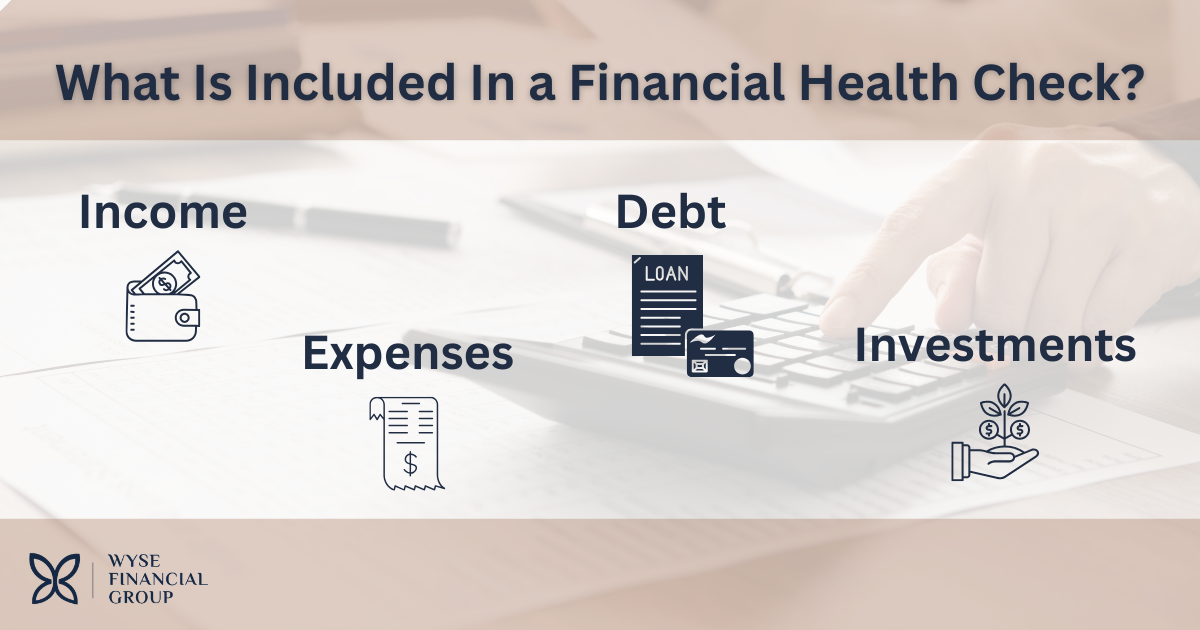
Questions to Consider During a Financial Review
Asking structured questions can help guide a more productive financial conversation, especially when reviewing your plan with a financial professional.Some commonly explored questions include:
- How does my current financial picture align with my stated goals?
- Does my investment approach still match my risk tolerance?
- Are there areas where my financial plan may need adjustment based on recent changes?
- How does my debt structure fit into my broader financial plan?
- Are there areas where my financial organization could be simplified or improved?
Common Areas to Review
A financial check-up typically focuses on several core areas of financial life.Budget and cash flow
Understanding how money moves in and out of your household.Investments
Evaluating diversification, performance, and alignment with long-term goals.Debt structure
Reviewing repayment progress and interest obligations.Insurance coverage
Confirming that protection levels still match your financial responsibilities.Retirement planning
Assessing whether savings strategies are consistent with long-term retirement expectations.Each of these areas plays a role in overall financial stability and long-term planning.
How to Adjust After a Financial Check-up
A financial review is most useful when it leads to thoughtful adjustments, if needed. These adjustments depend on individual circumstances and may include:- Updating monthly budgets based on current spending patterns
- Revisiting savings contributions
- Adjusting investment allocations based on risk tolerance
- Reviewing insurance coverage levels
- Refining financial goals based on new priorities
Staying Consistent Between Check-ups
Financial progress is often supported by small, consistent habits rather than large, occasional changes.Some helpful practices include:
- Tracking monthly spending to stay aware of cash flow
- Automating savings contributions where possible
- Reviewing account statements periodically
- Checking progress toward financial goals
Building a Habit of Financial Awareness
Regular financial check-ups can help create a more structured understanding of your financial life. Over time, this process may make it easier to recognize patterns, evaluate decisions, and adjust plans as needed.Financial planning is not a one-time event. It is an ongoing process that evolves alongside your life circumstances. Consistent reviews can help support that process by providing clarity at different stages of your financial journey.
How Wyse Financial Group Can Help
Wyse Financial Group works with individuals and families to review financial information, evaluate current strategies, and explore how different components of a financial plan may work together.These conversations often focus on helping individuals better understand their current financial picture, including savings, investments, insurance, and retirement planning considerations.
If you are considering a financial check-up or would like to review how your current financial strategy aligns with your goals, you can connect with Wyse Financial Group to start a conversation with our team.