
Creating a Sustainable Withdrawal Strategy for Retirement
Creating a sustainable withdrawal strategy for retirement is one of the most important parts of long-term financial planning. While many people spend years focused on accumulating retirement savings, the transition from saving to generating retirement income often requires a completely different planning mindset.
A sustainable withdrawal strategy is designed to help balance current income needs with long-term financial durability. Instead of withdrawing funds inconsistently or reacting emotionally to market changes, retirees can benefit from a more structured approach that accounts for investment performance, inflation, taxes, healthcare costs, and evolving lifestyle needs.
At Wyse Financial Group, retirement income planning is typically viewed within a broader comprehensive planning framework that connects investment strategy, tax considerations, and long-term financial goals into one coordinated approach.
Several factors influence whether a withdrawal strategy remains sustainable throughout retirement.
While the rule may provide a useful starting point, it is important to recognize that it was developed using historical assumptions that may not apply equally to every retiree or market environment.
Retirement planning today often involves additional complexities, including longer life expectancies, rising healthcare expenses, and more volatile market conditions.
During periods of market decline, reducing withdrawals temporarily may help preserve portfolio value and improve long-term sustainability. During stronger market environments, retirees may have greater flexibility to increase discretionary spending or revisit financial goals.
Personal circumstances can also influence retirement income needs. Healthcare expenses, housing changes, travel priorities, or family support responsibilities may all affect annual spending patterns.
A structured retirement income strategy helps create a framework for making these adjustments thoughtfully rather than reactively.
A diversified retirement portfolio may include:
Diversification does not eliminate investment risk, but it can help create a more balanced framework for retirement income planning.
For some retirees, diversification may also include sustainable or values-based investment considerations that align with broader financial priorities and long-term objectives.
Planning ahead for healthcare expenses can help reduce financial uncertainty and improve long-term retirement preparedness.
Consolidating and organizing accounts may help improve visibility into overall retirement income, asset allocation, and withdrawal planning.
Estate planning is another important component of long-term financial strategy. In addition to helping organize financial intentions, estate planning can help ensure that assets are distributed according to personal wishes and family priorities.
Different account types receive different tax treatment, making withdrawal sequencing an important part of retirement income planning.
Balancing present-day spending with long-term sustainability often requires thoughtful decision-making and periodic reevaluation.
This may involve:
A sustainable withdrawal strategy is designed to help balance current income needs with long-term financial durability. Instead of withdrawing funds inconsistently or reacting emotionally to market changes, retirees can benefit from a more structured approach that accounts for investment performance, inflation, taxes, healthcare costs, and evolving lifestyle needs.
At Wyse Financial Group, retirement income planning is typically viewed within a broader comprehensive planning framework that connects investment strategy, tax considerations, and long-term financial goals into one coordinated approach.
Understanding Sustainable Withdrawal Strategies
A sustainable withdrawal strategy focuses on creating retirement income while helping preserve long-term portfolio stability. Rather than relying on a fixed formula alone, sustainable planning evaluates spending needs, investment allocation, market conditions, and long-term goals to help create a retirement income strategy that can evolve over time.Several factors influence whether a withdrawal strategy remains sustainable throughout retirement.
Key considerations include:
- Annual spending needs: Understanding both essential expenses and discretionary lifestyle spending
- Market performance: Accounting for investment volatility and changing economic conditions
- Inflation: Adjusting for rising healthcare and cost-of-living expenses over time
- Tax efficiency: Coordinating withdrawals across account types to help manage taxable income
The 4% Rule and Its Limitations
The 4% rule is one of the most commonly referenced retirement withdrawal guidelines. The concept suggests withdrawing 4% of retirement savings during the first year of retirement and adjusting that amount annually for inflation.While the rule may provide a useful starting point, it is important to recognize that it was developed using historical assumptions that may not apply equally to every retiree or market environment.
Retirement planning today often involves additional complexities, including longer life expectancies, rising healthcare expenses, and more volatile market conditions.
Important limitations of the 4% rule include:
- Market sensitivity: Extended downturns can affect portfolio sustainability
- Longer retirement timelines: Many retirees may need income strategies designed for multiple decades
- Healthcare uncertainty: Medical and long-term care costs may increase significantly over time
- Personal variability: Spending patterns and retirement goals differ from household to household
Adapting Withdrawals to Market Conditions and Personal Needs
Retirement income planning is not static. Markets fluctuate, expenses evolve, and personal priorities often shift over time. A sustainable withdrawal strategy should be flexible enough to adjust to both financial and lifestyle changes.During periods of market decline, reducing withdrawals temporarily may help preserve portfolio value and improve long-term sustainability. During stronger market environments, retirees may have greater flexibility to increase discretionary spending or revisit financial goals.
Personal circumstances can also influence retirement income needs. Healthcare expenses, housing changes, travel priorities, or family support responsibilities may all affect annual spending patterns.
A structured retirement income strategy helps create a framework for making these adjustments thoughtfully rather than reactively.
Diversification and Retirement Income Stability
Diversification plays an important role in supporting retirement income sustainability. By spreading investments across multiple asset classes, retirees may reduce concentration risk and create a portfolio better positioned to navigate changing market environments.A diversified retirement portfolio may include:
- Equities: Long-term growth potential and inflation sensitivity
- Fixed income investments: Stability and income consistency
- Cash reserves: Liquidity for short-term income needs
- Real assets: Additional diversification and inflation responsiveness
Diversification does not eliminate investment risk, but it can help create a more balanced framework for retirement income planning.
For some retirees, diversification may also include sustainable or values-based investment considerations that align with broader financial priorities and long-term objectives.
Managing Healthcare Costs and Long-Term Care
Healthcare expenses are often one of the most significant financial considerations in retirement. Costs may increase substantially over time, especially when long-term care needs arise later in life.Planning ahead for healthcare expenses can help reduce financial uncertainty and improve long-term retirement preparedness.
Important planning considerations may include:
- Medicare coverage decisions
- Supplemental insurance planning
- Health Savings Account usage where applicable
- Long-term care insurance evaluation
- Preventive healthcare planning
Simplifying Accounts and Strengthening Estate Planning
As retirement progresses, simplifying financial accounts can improve organization and reduce complexity. Managing multiple retirement accounts, investment platforms, and banking relationships can become increasingly difficult over time.Consolidating and organizing accounts may help improve visibility into overall retirement income, asset allocation, and withdrawal planning.
Estate planning is another important component of long-term financial strategy. In addition to helping organize financial intentions, estate planning can help ensure that assets are distributed according to personal wishes and family priorities.
Estate planning discussions often include:
- Reviewing beneficiary designations regularly
- Updating wills and estate documents
- Evaluating trust strategies where appropriate
- Coordinating estate planning with tax considerations
Tax-Efficient Withdrawal Strategies
Taxes can significantly influence how long retirement savings last. A sustainable withdrawal strategy evaluates not only how much income is needed, but also where that income should come from and how withdrawals may affect taxable income over time.Different account types receive different tax treatment, making withdrawal sequencing an important part of retirement income planning.
Tax-aware retirement strategies may include:
- Coordinating withdrawals between taxable and tax-deferred accounts
- Managing required minimum distributions when applicable
- Evaluating Roth conversion opportunities during lower-income years
- Structuring withdrawals to help manage taxable income levels
Balancing Lifestyle, Legacy, and Financial Longevity
Retirement planning is not only about preserving assets. It is also about creating flexibility to support lifestyle priorities, family goals, charitable interests, and long-term financial independence.Balancing present-day spending with long-term sustainability often requires thoughtful decision-making and periodic reevaluation.
This may involve:
- Prioritizing essential living expenses first
- Structuring discretionary spending intentionally
- Maintaining emergency reserves for unexpected costs
- Incorporating charitable or legacy-focused goals into the broader financial strategy
The Role of Ongoing Guidance and Regular Reviews
Retirement income planning is not a one-time event. Markets change, expenses evolve, and financial priorities may shift throughout retirement.Regular financial reviews can help evaluate whether a withdrawal strategy continues to align with current income needs, portfolio performance, and long-term financial objectives.
Ongoing reviews may focus on:
- Portfolio allocation and risk exposure
- Withdrawal sustainability
- Tax efficiency opportunities
- Healthcare and insurance considerations
- Lifestyle or spending changes
Building a Retirement Income Strategy Designed for the Long Term
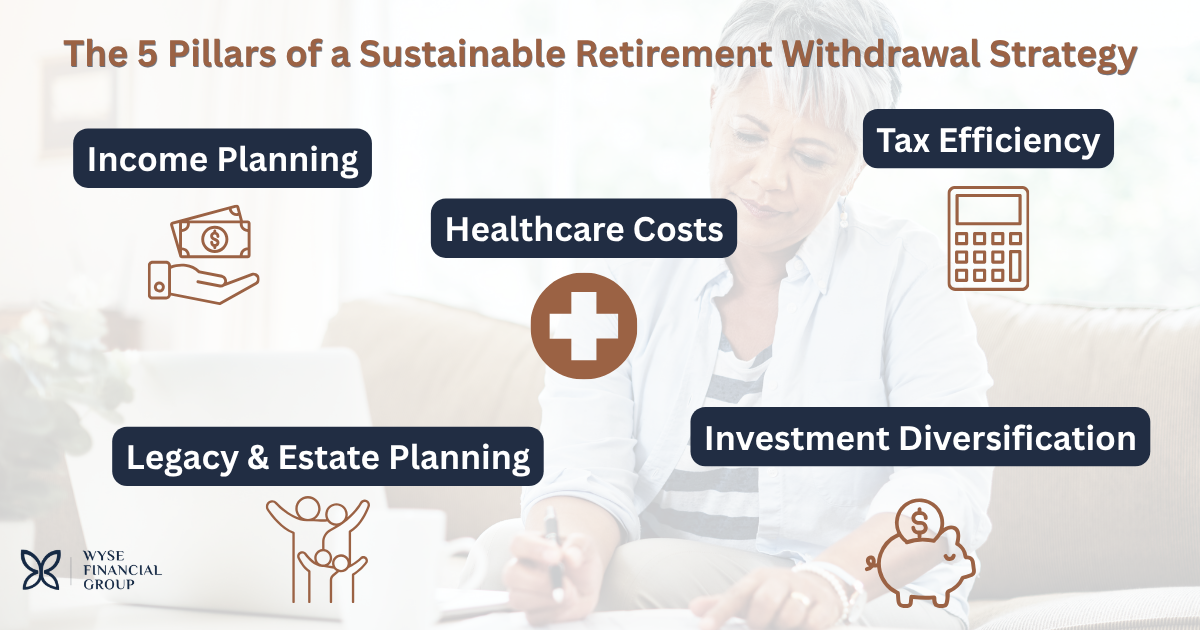
A sustainable retirement withdrawal strategy involves more than selecting a withdrawal percentage. It requires coordination between investment planning, taxes, healthcare considerations, estate planning, and long-term financial goals.Wyse Financial Group works with individuals and families to develop comprehensive financial planning strategies designed to support long-term retirement income planning and overall financial organization.