Should I Move Money Out of My 401(k) Before I Retire?
For many people, a 401(k) plan has been the backbone of their retirement savings for decades. You contributed consistently, stayed invested through market ups and downs, and watched the balance grow. As retirement moves from a distant milestone to a date on the calendar, it’s natural to wonder whether that money should stay exactly where it is, or whether it might make sense to reposition some of it before you stop working.
This isn’t about “getting out” of your 401(k) or making a dramatic change. Often, the real question is about choice, structure, and how your money will support you once paychecks stop.
As retirement gets closer, priorities often shift:
These considerations lead many people to ask whether part of their 401(k) could be diversified into a different account structure, often through what’s known as an in-service rollover, before they retire.
If your plan allows it, an in-service rollover may let you move some existing funds into an IRA. This is not a taxable withdrawal when handled properly. It’s a transfer from one tax-advantaged account to another.
Keeping all of your retirement savings inside a single 401(k) plan can limit:
An IRA established through an in-service rollover may offer access to a broader range of investment strategies and planning tools, some of which aren’t available inside most employer plans. For many people, this kind of adaptability becomes more relevant as withdrawals move from a future concern to a near-term reality.
For many people, a partial rollover creates a middle ground:
An in-service rollover tends to work best when it’s connected to a broader retirement plan that considers:
The goal isn’t to outsmart the system or chase performance. It’s to create a structure that offers clarity, adaptability, and confidence as retirement moves from an idea to a reality.
If you’ve been wondering whether keeping everything in your 401(k) still fits your needs, asking the question now gives you time to make informed, measured decisions, on your terms. A planning conversation with us can help you understand what your plan allows, what trade-offs matter most to you, and whether any changes support your broader retirement goals.
This isn’t about “getting out” of your 401(k) or making a dramatic change. Often, the real question is about choice, structure, and how your money will support you once paychecks stop.
Why this question comes up before retirement
During your working years, a 401(k) is designed for simplicity. You choose from a limited menu of investments, contribute automatically, and let time do the heavy lifting. That structure works well when the goal is long-term accumulation.As retirement gets closer, priorities often shift:
- You may want more control over how risk is managed
- You may want income planning to feel clearer and more intentional
- You may want to not rely on a single account structure or custodian
- You may want your investments aligned with how and when you’ll actually use the money
These considerations lead many people to ask whether part of their 401(k) could be diversified into a different account structure, often through what’s known as an in-service rollover, before they retire.
What is an in-service rollover?
An in-service rollover allows you to move a portion of your 401(k) balance into an IRA while you’re still employed. Not all plans allow this, and those that do often limit it based on age (commonly 59½) or contribution type. Your employer or plan administrator can help clarify what your plan permits.If your plan allows it, an in-service rollover may let you move some existing funds into an IRA. This is not a taxable withdrawal when handled properly. It’s a transfer from one tax-advantaged account to another.
Why diversification matters beyond investments
When people hear “diversification,” they often think about stocks versus bonds. That’s important, but diversification can also apply to account structure.Keeping all of your retirement savings inside a single 401(k) plan can limit:
- Investment choice and customization
- Tax planning flexibility in retirement
- Distribution options and coordination
An IRA established through an in-service rollover may offer access to a broader range of investment strategies and planning tools, some of which aren’t available inside most employer plans. For many people, this kind of adaptability becomes more relevant as withdrawals move from a future concern to a near-term reality.
This isn’t an “all or nothing” decision
One of the most important things to understand is that this decision is rarely an either/or choice. You don’t have to decide that everything stays put or that everything moves.For many people, a partial rollover creates a middle ground:
- Some assets remain in the employer plan
- Some assets are repositioned for added flexibility into an IRA
- Contributions and employer matches continue uninterrupted
Potential benefits of an in-service rollover
An in-service rollover isn’t right for everyone, but here are some reasons it’s often considered.- Broader investment options
- Risk alignment as retirement approaches
- More coordinated retirement income planning
- Maintaining access to your employer plan
Important trade-offs to consider
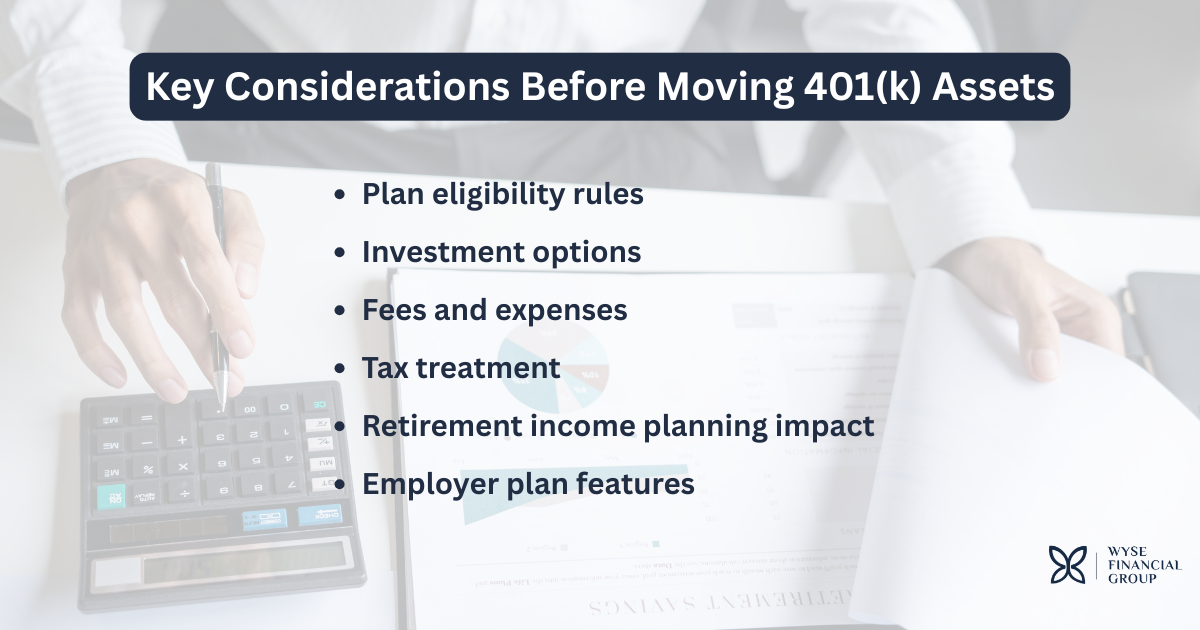
Moving money isn’t automatically better, it’s simply different. There are real questions to consider.- Plan features you may want to keep
- Fees and coordination
- Plan rules vary widely
Timing matters, but so does intention
The question isn’t just when you can move money, it’s why you would want to.An in-service rollover tends to work best when it’s connected to a broader retirement plan that considers:
- Expected income needs
- Tax implications over time
- Risk tolerance as markets fluctuate
- Legacy goals for family
A thoughtful next step
If you’re within a few years of retirement, or simply thinking more seriously about how your savings will support your life, it may be worth reviewing your 401(k) plan rules and understanding what options are available to you.The goal isn’t to outsmart the system or chase performance. It’s to create a structure that offers clarity, adaptability, and confidence as retirement moves from an idea to a reality.
If you’ve been wondering whether keeping everything in your 401(k) still fits your needs, asking the question now gives you time to make informed, measured decisions, on your terms. A planning conversation with us can help you understand what your plan allows, what trade-offs matter most to you, and whether any changes support your broader retirement goals.