
Getting Started with Wyse Financial Group: Your First Step Toward Financial Confidence
Getting started with a financial advisor can feel overwhelming, especially if you are not sure what to bring, what questions to ask, or what financial planning actually includes. Financial planning can help you organize your financial priorities, evaluate your current situation, and make informed decisions about goals such as retirement, investing, insurance, and managing your wealth. The first step is finding a financial professional whose services, approach, and experience align with your needs.
If you are considering Wyse Financial Group, understanding what to expect before your first conversation can help you feel more prepared. This guide covers how to prepare for a financial planning meeting, what questions to ask a financial advisor, what financial planning may include, and how to evaluate whether a financial planning relationship is right for you.
Depending on your needs, financial planning may involve areas such as:
For example, someone approaching retirement may have very different planning considerations than a young professional who is focused on building savings or a business owner balancing personal and business finances.
It can be tempting to compare advisors based solely on investment performance or online reviews. However, financial planning involves much more than investment selection. A better starting point is understanding how the advisor approaches your overall financial picture.
Consider asking:
However, gathering some basic information can make the initial conversation more productive.
If you are considering Wyse Financial Group, understanding what to expect before your first conversation can help you feel more prepared. This guide covers how to prepare for a financial planning meeting, what questions to ask a financial advisor, what financial planning may include, and how to evaluate whether a financial planning relationship is right for you.
What Does a Financial Advisor Do?
A financial advisor can help individuals and families evaluate different aspects of their financial situation and consider strategies for working toward their goals. The services provided can vary from one firm to another, so it is important to understand what a particular advisor offers.Depending on your needs, financial planning may involve areas such as:
- Retirement planning
- Investment planning
- Cash flow and budgeting considerations
- Insurance planning
- Tax planning considerations
- Education funding
- Estate planning coordination
- Wealth management
For example, someone approaching retirement may have very different planning considerations than a young professional who is focused on building savings or a business owner balancing personal and business finances.
What Should You Know Before Choosing a Financial Advisor?
Before choosing a financial advisor, consider the firm's services, experience, planning process, fees, communication approach, and the types of clients it typically serves.It can be tempting to compare advisors based solely on investment performance or online reviews. However, financial planning involves much more than investment selection. A better starting point is understanding how the advisor approaches your overall financial picture.
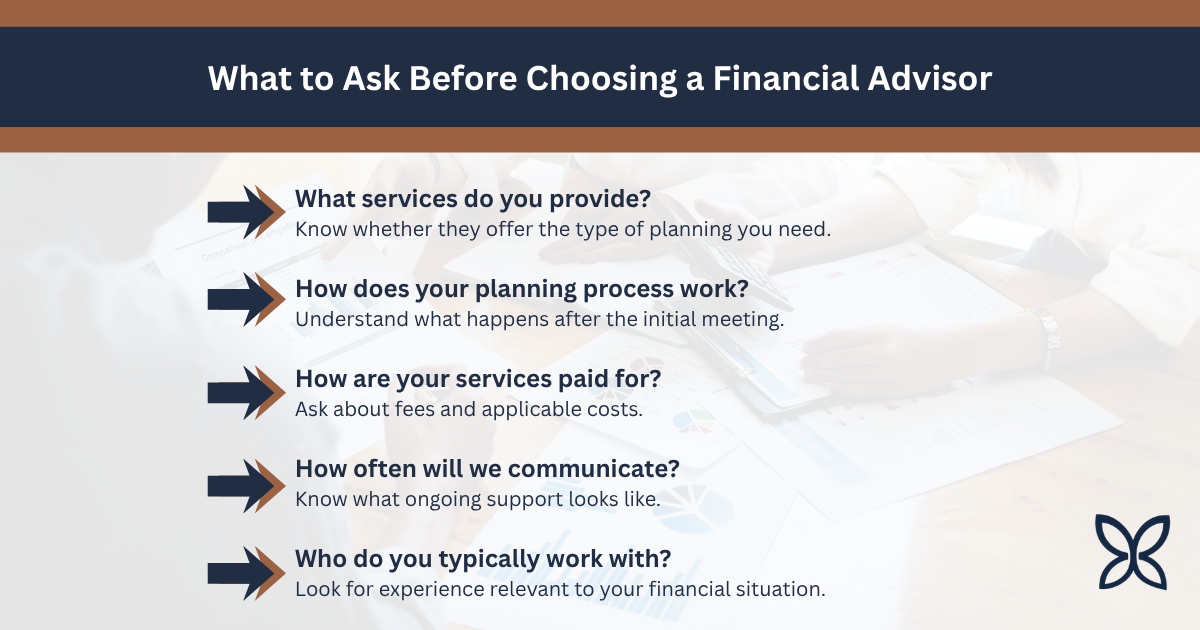
Consider asking:
- What financial planning services do you provide?
- Who do you typically work with?
- How does your financial planning process work?
- How are your services and recommendations paid for?
- How often do you meet with clients?
- What types of financial decisions can you help me evaluate?
- What information should I bring to an initial meeting?
How to Prepare for Your First Financial Planning Meeting
You do not need to have your entire financial life organized before meeting with a financial advisor. In fact, one purpose of financial planning is to help you understand where you are starting and what areas may need attention.However, gathering some basic information can make the initial conversation more productive.
Financial Information to Gather
If available, consider bringing or having access to:- Recent income information
- Monthly spending estimates
- Checking and savings account balances
- Retirement account statements
- Investment account statements
- Mortgage and other debt information
- Insurance policies
- Employer retirement plan information
- Social Security information
- Major upcoming financial goals
What Happens During a First Meeting With a Financial Advisor?
The first meeting with a financial advisor is generally an opportunity for both sides to learn more about each other.You may discuss your financial goals, current circumstances, concerns, and the areas where you would like guidance. The advisor may also explain the firm's services, planning process, fees, and what working together could look like.
Depending on the firm's process, additional meetings may be needed to gather information and develop recommendations.
A typical financial planning process may include:
1. Discussing Your Goals
Start with what you want your finances to support. This could include retiring at a certain age, generating retirement income, saving for education, managing an inheritance, or preparing for major expenses.2. Reviewing Your Financial Picture
A financial professional may review information such as your income, expenses, assets, investments, debts, insurance, and other relevant financial considerations.3. Identifying Planning Priorities
Once your current situation and goals are understood, you can identify areas that may deserve attention.4. Evaluating Potential Strategies
Your financial advisor may present strategies or recommendations based on your circumstances, goals, and risk considerations.5. Reviewing Your Plan Over Time
Financial circumstances can change. Retirement dates may move, income can change, markets fluctuate, and new financial priorities can emerge. Regular reviews can provide an opportunity to revisit your plan as appropriate.The exact process will vary by firm, so ask what you can expect before moving forward.
What Questions Should You Ask a Financial Advisor?
Knowing what to ask a financial advisor can make it easier to determine whether their approach fits your needs.Consider asking questions such as:
- What financial planning services do you offer?
- How do you learn about my financial goals?
- What does your planning process look like?
- How do you communicate with clients?
- How often are financial plans reviewed?
- How are your services compensated?
- What types of investments or accounts do you work with?
- What information will you need from me?
- How do you approach investment risk?
- What happens if my financial goals or circumstances change?
How Does Financial Planning Help With Retirement?
Retirement planning is one of the areas where a comprehensive view of your finances can be particularly useful.Retirement planning may involve considering:
- When you want to retire
- How much you may need to spend
- Potential retirement income sources
- Social Security
- Retirement accounts
- Investment allocations
- Healthcare expenses
- Taxes
- Potential long-term care costs
- How your financial needs may change over time
For example, you may want to consider how your plan could change if you retire earlier than expected, experience a period of market volatility, or face higher-than-anticipated expenses.
What Should You Look for in an Investment Portfolio Review?
If investing is part of your financial plan, an investment portfolio review should consider more than individual funds or recent returns.You may want to discuss:
- Your investment goals
- Time horizon
- Risk tolerance
- Diversification
- Asset allocation
- Investment expenses
- Tax considerations
- Concentration in individual investments
- How the portfolio relates to your broader financial plan
The purpose of reviewing a portfolio is not necessarily to make frequent changes. It is to evaluate whether your investments continue to align with your financial objectives and circumstances.
How Can a Financial Advisor Help With Major Financial Decisions?
Financial decisions rarely happen in isolation.For example, deciding when to retire can affect your Social Security strategy, investment withdrawals, healthcare costs, and tax situation. Buying a home can affect your cash flow and savings goals. Receiving an inheritance may raise questions about investing, taxes, charitable giving, or estate planning.
A financial advisor can help you evaluate the financial considerations surrounding these decisions and understand how different choices may affect your broader plan.
In some situations, it may also make sense to coordinate with other professionals, such as tax or legal professionals. Financial planning does not replace individualized legal or tax advice.
How Do You Know if a Financial Planning Firm Is a Good Fit?
There is no single financial planning firm that is right for everyone. The best fit depends on your financial situation, goals, preferences, and the type of guidance you are looking for.When evaluating a firm, consider:
Services
Does the firm offer the types of financial planning services you need?Experience
Does the firm's experience align with the financial questions or life stage you are navigating?Planning Process
Can the advisor clearly explain what happens after the initial meeting?Communication
Do you understand how and when you will communicate with the advisor?Fees
Are you comfortable with how the firm's services are compensated? Ask for a clear explanation of applicable fees and expenses before moving forward.Approach
Do you understand how the advisor approaches financial planning and investment decisions?Taking the time to ask these questions can help you make a more informed decision rather than choosing a financial professional based solely on marketing or online reviews.
A Simple Checklist Before Your First Meeting
If you are ready to explore financial planning, keep the process simple.1. Identify Your Top Financial Priorities
Write down the three financial goals or concerns that matter most to you right now.2. Gather Your Financial Information
Collect recent information about your income, expenses, savings, investments, retirement accounts, debts, and insurance.3. Think About Your Timeline
Consider when you may need the money for major goals such as retirement, education, or a home purchase.4. Write Down Your Questions
Bring questions about services, fees, communication, investment approach, and the planning process.5. Evaluate the Fit
After the conversation, consider whether you understand the firm's services, approach, and applicable costs and whether they align with what you are looking for.Getting Started With Wyse Financial Group
Financial planning does not have to start with having all the answers. It can start with understanding where you are today, identifying what matters most to you, and exploring the financial decisions that may help support your goals.
If you are considering working with a financial professional, Wyse Financial Group can help you explore your financial planning needs and determine whether its services may be appropriate for your situation. A devoted financial advisor can help you review your goals, financial circumstances, and planning priorities while providing guidance based on the information available.
Contact Wyse Financial Group to learn more about getting started with a financial planning conversation.