
The Basics of Financial Planning for Women in Transition
Major life changes can bring emotional strain as well as financial complexity. Events such as divorce, the loss of a spouse, or a meaningful career shift often require women to take on new financial responsibilities, sometimes for the first time. During these periods, having a clear and thoughtful financial approach can help create stability and reduce uncertainty.
Financial planning during a transition is not about making rushed decisions or trying to solve everything at once. It is about understanding where you are today, identifying what matters most, and taking measured steps that support both immediate needs and long term well being.
This overview is designed to provide educational guidance to help women organize their financial lives, evaluate choices carefully, and move forward with greater clarity.
In addition, many women experience moments where they suddenly become the primary financial decision maker. This shift can feel overwhelming, especially when combined with emotional stress.
Recognizing these realities is not meant to create concern. Instead, it helps frame the importance of planning deliberately and seeking reliable information before making financial decisions.
Start by gathering key documents, including:
From there, outline:
This process helps establish net worth and monthly cash flow, both of which are essential when evaluating future decisions.
Focus first on essential expenses such as housing, healthcare, insurance, and food. Then evaluate discretionary spending and identify areas where adjustments may be appropriate.
Many individuals find it helpful to track spending for several months to understand patterns before making changes. Digital tools or simple spreadsheets can assist with organization.
A commonly referenced guideline is to maintain savings equal to three to six months of essential expenses. The appropriate amount varies based on employment stability, health considerations, and household needs.
Consistency is more important than speed. Even small, regular contributions can gradually strengthen financial resilience.
Consider focusing first on higher interest obligations, which can grow more quickly over time. At the same time, maintaining on time payments across all accounts helps protect credit history.
Credit reports can be reviewed periodically to ensure accuracy and monitor progress. Strong credit may support future borrowing options if needed.
Short term priorities may include:
Longer term considerations may include:
Clearly defined goals can help guide financial decisions and prevent reactive choices.
Key considerations include:
Diversification and alignment with time horizon are often central principles in managing retirement assets. Because every situation is different, decisions should reflect personal objectives, risk tolerance, and financial capacity.
General principles investors often consider include:
Regular reviews can help ensure that an investment strategy remains consistent with evolving needs.
Documents to review may include:
Keeping these documents current may help avoid confusion and ensure that intentions are carried out as planned.
Financial planning during a transition is not about making rushed decisions or trying to solve everything at once. It is about understanding where you are today, identifying what matters most, and taking measured steps that support both immediate needs and long term well being.
This overview is designed to provide educational guidance to help women organize their financial lives, evaluate choices carefully, and move forward with greater clarity.
Understanding the Financial Impact of Life Transitions
Women often face financial transitions differently due to a combination of social, economic, and longevity factors. On average, women live longer than men, which means retirement assets may need to last for a longer period of time. Earnings interruptions related to caregiving or career changes can also affect lifetime savings and Social Security benefits.In addition, many women experience moments where they suddenly become the primary financial decision maker. This shift can feel overwhelming, especially when combined with emotional stress.
Recognizing these realities is not meant to create concern. Instead, it helps frame the importance of planning deliberately and seeking reliable information before making financial decisions.
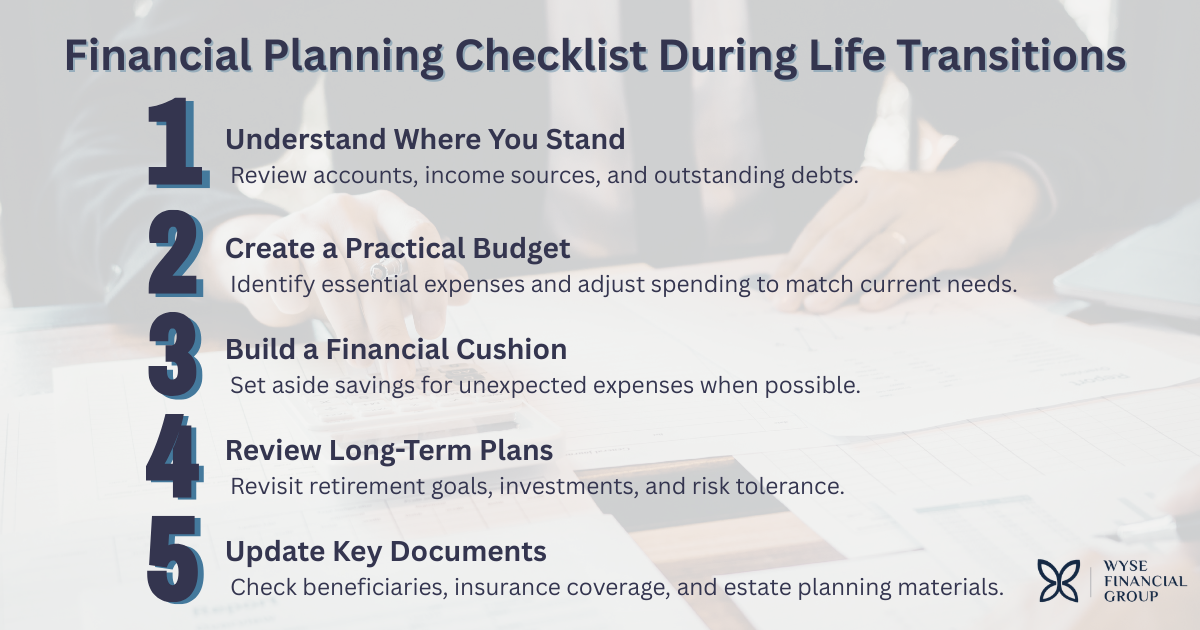
Step One: Assess Your Current Financial Picture
Before making changes, it is important to understand your current financial position. A clear snapshot of your resources and obligations creates a foundation for informed decision making.Start by gathering key documents, including:
- Bank and investment account statements
- Retirement accounts such as 401(k)s or IRAs
- Insurance policies
- Mortgage or loan information
- Estate planning documents
- Tax returns
From there, outline:
- Assets: savings, investments, real estate, and other property
- Liabilities: mortgages, credit cards, personal loans, or other debts
- Income sources: salary, pension, Social Security benefits, or other payments
- Regular expenses: housing, insurance, utilities, food, and discretionary spending
This process helps establish net worth and monthly cash flow, both of which are essential when evaluating future decisions.
Creating Structure Through Budgeting
A practical budget provides visibility and control during times of change. Rather than viewing a budget as restrictive, think of it as a tool that aligns spending with priorities.Focus first on essential expenses such as housing, healthcare, insurance, and food. Then evaluate discretionary spending and identify areas where adjustments may be appropriate.
Many individuals find it helpful to track spending for several months to understand patterns before making changes. Digital tools or simple spreadsheets can assist with organization.
Building or Rebuilding an Emergency Fund
Unexpected expenses can occur at any stage of life, but they can feel more disruptive during a transition. Establishing an emergency reserve can help provide flexibility and reduce reliance on credit.A commonly referenced guideline is to maintain savings equal to three to six months of essential expenses. The appropriate amount varies based on employment stability, health considerations, and household needs.
Consistency is more important than speed. Even small, regular contributions can gradually strengthen financial resilience.
Managing Debt Thoughtfully
Debt management plays an important role in maintaining financial stability. Begin by identifying all outstanding balances and associated interest rates. Understanding the full picture allows you to prioritize repayment strategies.Consider focusing first on higher interest obligations, which can grow more quickly over time. At the same time, maintaining on time payments across all accounts helps protect credit history.
Credit reports can be reviewed periodically to ensure accuracy and monitor progress. Strong credit may support future borrowing options if needed.
Revisiting Financial Goals
Transitions often require adjusting previous financial goals to reflect new circumstances. This is an opportunity to reassess what financial security means to you today.Short term priorities may include:
- Stabilizing monthly cash flow
- Updating legal and financial accounts
- Creating savings for unexpected needs
Longer term considerations may include:
- Retirement planning
- Housing decisions
- Supporting family members
- Charitable or legacy intentions
Clearly defined goals can help guide financial decisions and prevent reactive choices.
Retirement Planning Considerations
Retirement planning remains important even during periods of change. Reviewing existing retirement accounts and understanding contribution options can help maintain long term progress.Key considerations include:
- Evaluating account allocations and risk exposure
- Reviewing beneficiary designations
- Understanding withdrawal rules and tax implications
- Considering how changes in income affect savings strategies
Diversification and alignment with time horizon are often central principles in managing retirement assets. Because every situation is different, decisions should reflect personal objectives, risk tolerance, and financial capacity.
Investment Principles During Transition
Market conditions and personal circumstances may both influence investment decisions. Periods of uncertainty sometimes lead individuals to make abrupt changes, but maintaining a disciplined approach can help avoid unintended consequences.General principles investors often consider include:
- Aligning investments with long term goals rather than short term emotions
- Maintaining diversification across asset types
- Reviewing, rather than reacting to, market movements
- Understanding the relationship between risk and potential return
Regular reviews can help ensure that an investment strategy remains consistent with evolving needs.
Legal and Estate Planning Updates
Life events frequently require updates to legal and estate documents. Ensuring these materials reflect current wishes is an important part of financial organization.Documents to review may include:
- Wills and trusts
- Powers of attorney
- Healthcare directives
- Beneficiary designations on financial accounts and insurance policies
Keeping these documents current may help avoid confusion and ensure that intentions are carried out as planned.
Insurance and Risk Management
Insurance coverage should also be evaluated during transitions. Changes in household structure, income, or dependents can affect the type and amount of coverage that is appropriate.Areas to review may include:
- Health insurance
- Life insurance
- Disability coverage
- Property and liability protection
- Long term care considerations
The goal is to align coverage with current needs while avoiding unnecessary duplication.
The Value of Financial Education
Financial confidence often grows through continued learning. Reliable educational resources, professional insights, and careful research can help individuals feel more prepared to make decisions over time.Many women find it helpful to:
- Attend financial education workshops or seminars
- Use reputable financial planning tools
- Read materials from trusted sources
- Ask questions before implementing changes
Developing familiarity with financial concepts can make future decisions feel more manageable.
Moving Forward at Your Own Pace
There is no universal timeline for financial adjustment after a major life event. Some decisions may need to be addressed promptly, while others can unfold gradually.Allowing time for thoughtful evaluation can help reduce stress and support more informed choices. Progress often occurs step by step rather than all at once.
A Thoughtful Approach to the Next Chapter
Financial transitions can feel complex, but they also present an opportunity to reorganize, clarify priorities, and build a framework that reflects your current life. Careful planning, reliable information, and a deliberate pace can help support long term financial well being.For those who would like professional guidance, Wyse Financial works with individuals to provide education, organization, and planning support tailored to their circumstances.